HTQLDB · Accounting Ready
Books that balance. Records you can trust.
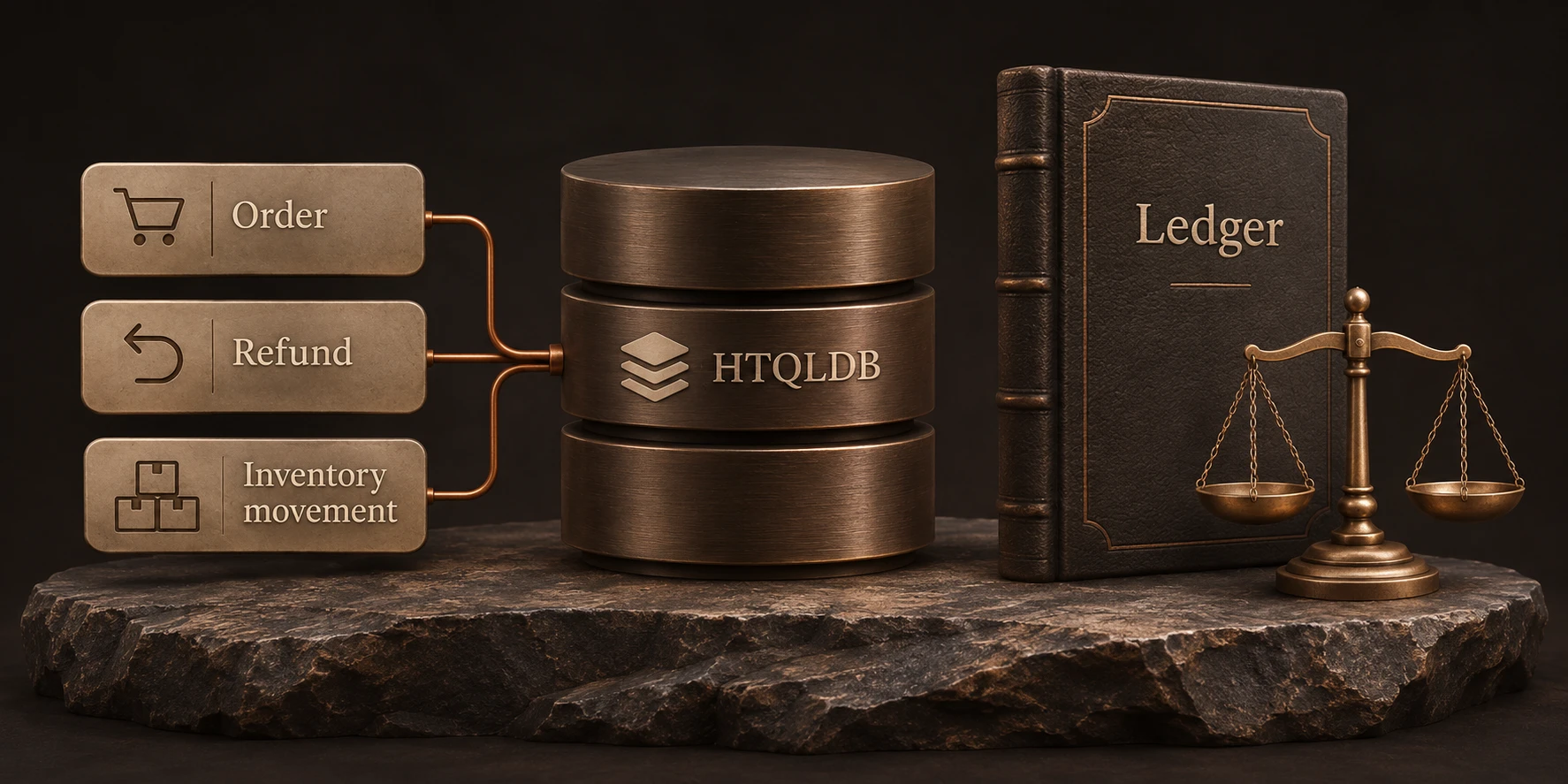
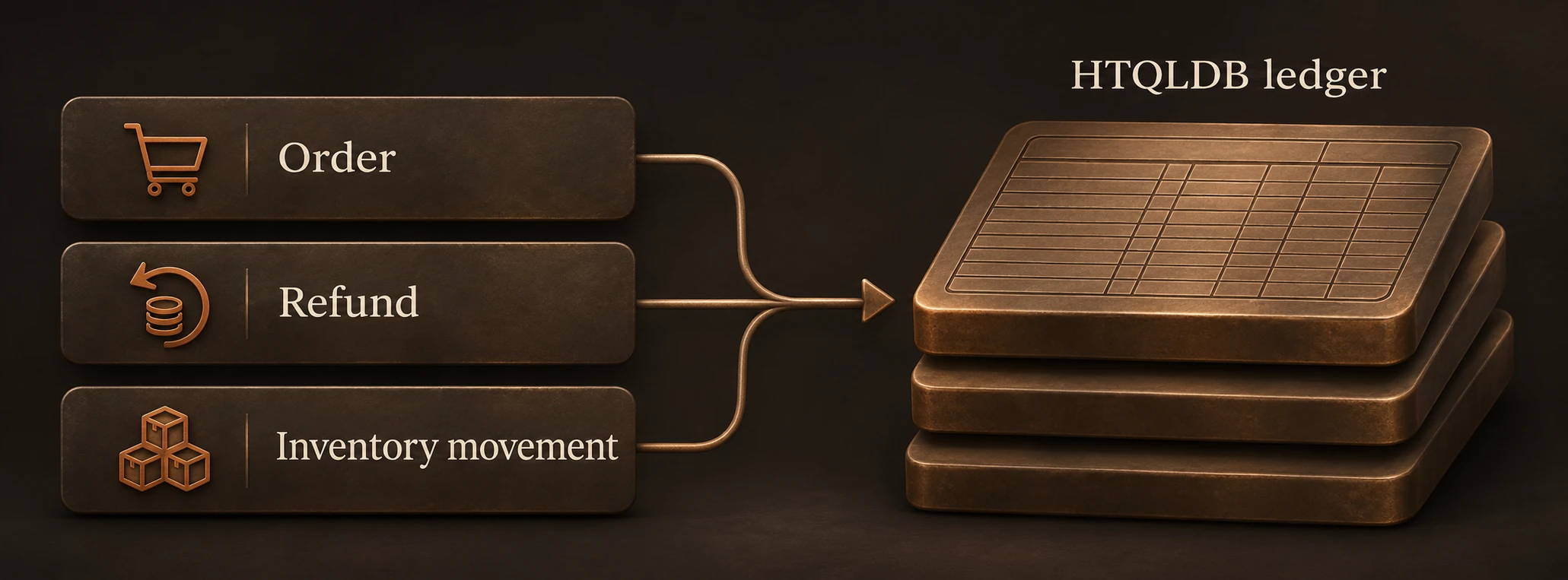
Native double-entry accounting connects sales, refunds, stock and financial operations to the same business record. Know where every entry came from.
- Double-entry enforcement
- Traceable journals
- Validated closing

Why Accounting Ready
Every transaction has a financial story.
When commerce and accounting live in separate systems, reconciliation becomes another integration project. HTQLDB records both from the same source, so financial records stay connected to the events behind them.
Accounting answers to your auditor. Finance answers to you.”
Enforced double entry
Balanced before it is posted.
The database refuses unbalanced journals. Every commercial event can be traced to its accounting entries.
INSERT {<JSON>} INTO orders| Account | Debit | Credit |
|---|---|---|
| Cash | $100 | |
| Sales revenue | $100 | |
| Cost of goods sold | $60 | |
| Inventory | $60 | |
| Total | $160 | $160 |
Balanced journal
The accounting foundation
The entries your business needs.

Commerce events
Orders, refunds, chargebacks and reversals.

Operating expenses
Payroll, marketing accruals and gateway fees.

Assets & liabilities
Depreciation, loans and settlements.

Deferred revenue
Gift cards and loyalty, redemption and breakage.

Inventory valuation
Reconcile stock with the ledger.

Corrections
Reverse entries with a recorded reason.
Period close and evidence
Close with confidence.
Validate the period before close, raise reconciliation exceptions and preserve the posted record through reversals.
History remains intact.
- Validate
- Reconcile
- Close
- Audit-lock

Reports
Your financial statements, on demand.
- Trial balance
- Income statement
- Balance sheet
- Cash flow statement
INCOME_STATEMENT("gid://hedgetech/tenant/abc", "last_quarter")Your accountant keeps their tools.
Export the general ledger for your existing accounting workflow.
Explore HTQL in practiceLink to Finance
One record. Better decisions.
Accounting and finance use the same orders, refunds, fees, stock and journals under the Sigmar Finance Protocol.

Build on a financial record you can trust.
Bring accounting closer to the application and the business events it records.