HTQLDB CMS · Content Ready
Your CMS is a second database. Ours is the database.
Pages, menus, emails and images live beside your orders and customers: authored by your team, governed by the same rules, and rendered with live data in a single query.
- No second login
- Every edit restorable
- Content meets live data
The problem
Every site runs two databases. Only one of them is yours.
A separate CMS means another login, permissions, backups and copied product data. Prices, accounts and audit logs must stay in step.
Two databases, kept in step
- Business database
- CMS database
HTQLDB
- Business data and content
- Under shared rules
Same tables. Same permissions. Same query language. Same history.
Content meets data
The words come from your CMS. The numbers come from your books. One statement.
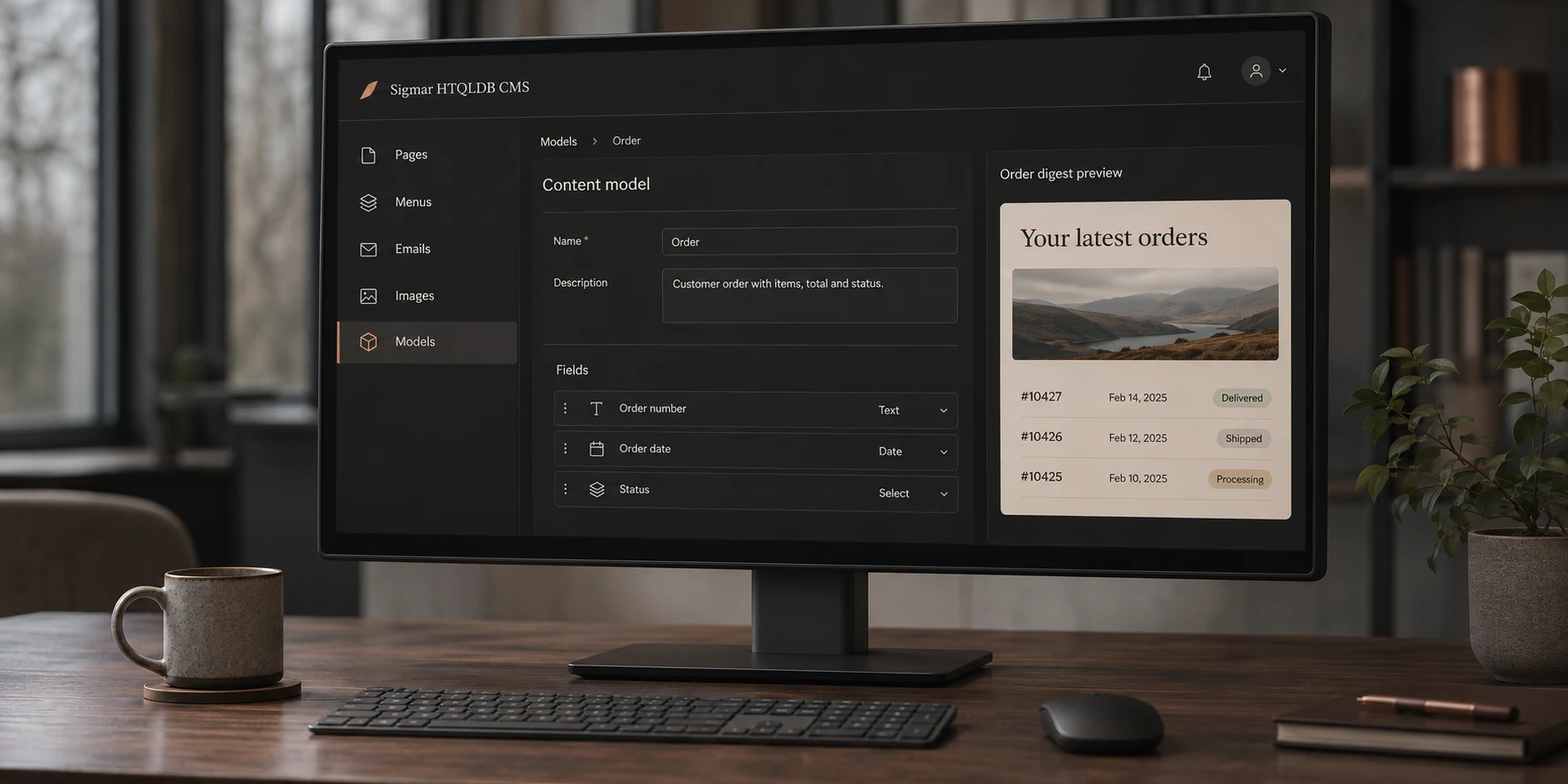
Your team edits the template. HTQL retrieves the data. Handlebars renders both inside HTQLDB under the caller’s permissions.
LET tpl = LOOKUP("content.entries",WHERE(id = "orderDigest"),SHOW("fields"), TAKE(1))LET orders = LOOKUP("orders",SORT("created_at DESC"),SHOW("order_number", "total"), TAKE(5))RETURN HANDLEBARS(PLUCK(PLUCK(PLUCK(tpl, "fields"), "body"), "en-US"),{"orders": orders})
<ul>{{#each orders}}
  <li>Order {{order_number}}:
    {{total}}</li>
{{/each}}</ul>
- Order 10427: $249.00
- Order 10426: $79.00
- Order 10425: $420.00
- Order 10424: $129.00
- Order 10423: $95.00
Change the wording in the console and the next render uses it. No deploy.
Content models
A page is not a blob of HTML. It is a shape your team defines.
Define models and their fields as data. Your team adds fields in the console, and the editor offers them immediately. Linked entries make up the page.
- Page
- Hero banner
- Layout
- Card
- Icon
- Image
- Content card
- Callout
- Short text
- Long text
- Number
- Date
- True or false
- List
- Object
- Link
- Only the values you allow
- Only the links you allow
- Required fields are marked
LOOKUP("content.content_types", WHERE(id = "page"), SHOW("id", "name", "fields"), TAKE(1))The same models shape your site, your emails and your forms.
What you stop building
Everything a CMS does. Nothing it costs you to keep in step.
- Model itDefine content shapes and fields. Add a field without a deploy.
- Author itEdit pages, menus and footers. Upload images.
- Restore itEvery save keeps the previous version.
- Publish itRefresh the live site and edge cache.
- Govern itSites read. Authorised console users write.
- Isolate itEach site reads only its own content.
- Render itHandlebars for pages, emails, text messages and Flow notifications.
- Query itRead, filter and join content with business data in HTQL.
LOOKUP("content.entries", WHERE(slug = "index"), SHOW("fields"), TAKE(1))One template language
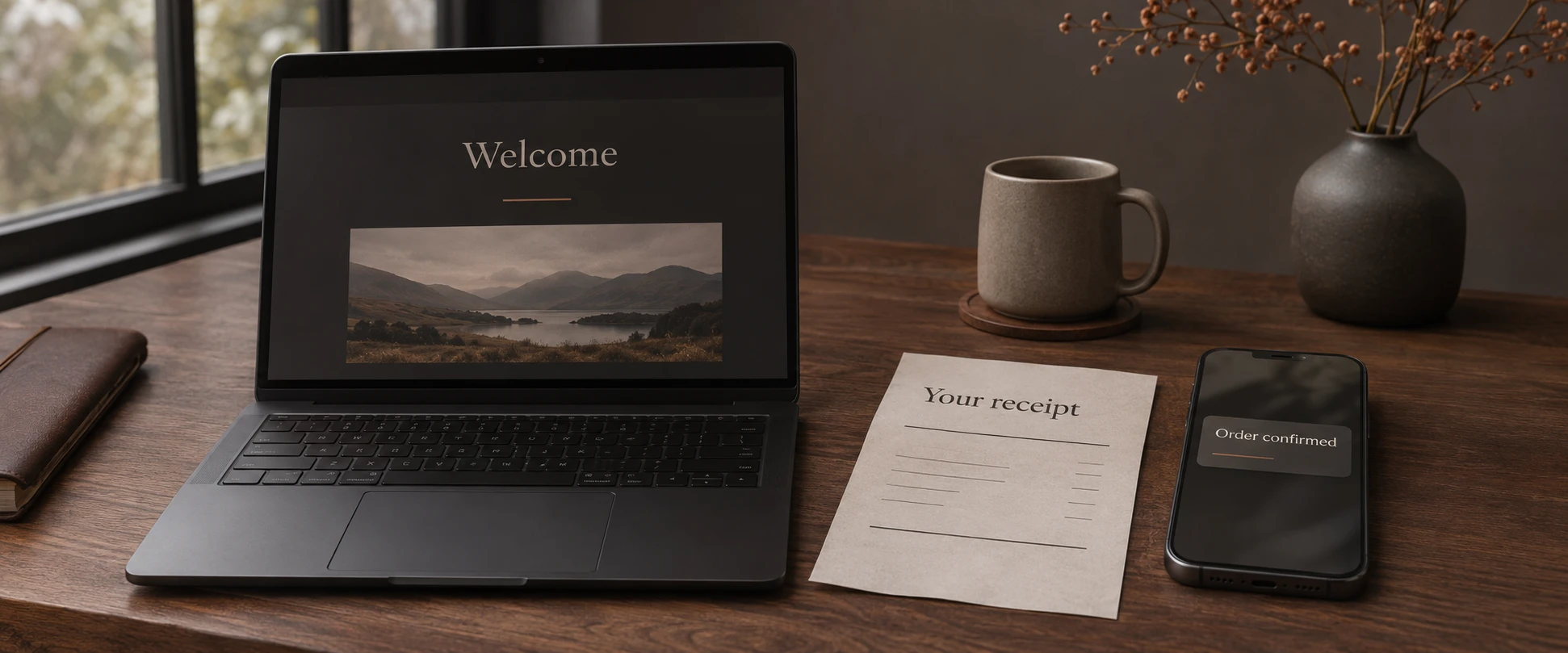
The welcome email, the receipt, the alert. Edited where the website is edited.
Your team edits email and text-message templates in the same console, with the same permissions and version history.
- One language
- Safe by default
- Same history
Proof
This page is a CMS entry. So is every page on this site.
sigmar.io

The Sigmar website runs on HTQLDB CMS for its pages, menus and images.
profitguard.app

The Profit Guard site also reads its content through HTQL.
Both sites read their pages, menus, footers and images through HTQL. HTQLDB’s own emails are templates in the same store.
If it carries us, it carries you.